“One of one.”
The folklorist and emerita professor Lydia Fish, Ph. D., left us in her sleep on January 20. She was 85–and like that, one of our city’s human treasures is gone.
Many of you knew Lydia without knowing it, at least if you’ve spent time around Buffalo in the last fifty years. Generations of servers knew Lydia. Oliver’s, Coco, Left Bank, Trattoria Aroma, the late Biac’s and Just Pasta . . . Most evenings of the week this middle-sized, long-haired, dignified lady could be found holding court with an eclectic circle. She caught the eye. Her dress was bohemian, even witchy. She caught the ear. She wasn’t loud, but her tone was . . . stately.
Some of the cloistered religious people I’ve met seemed to be living in another century. Lydia was partly in the other world. I’ve met people who found her such a poetic teacher of fantasy literature that Harry Potter’s lapses, Aeneas’ descent to the Underworld, and Gandalf’s comments on Mordor seemed as real as that cocktail hour at Black Sheep. (“It’s Wednesday. Michael is mixing!”) Shopkeepers in Allentown and North Buffalo tell me she could try on scarves and entertain the whole shop by the hour. Everyone around her soared on her magic-carpet flights.
Lydia was finishing her Ph.D. with Indiana University when she started teaching at SUNY Buffalo State in 1967. Her BA and MA degrees were from UNC at Chapel Hill, and it seems to have been on Tobacco Road that she discovered her specialty: the occupational folklore of the military. There she was the real deal. A rock star.
Lydia’s Buffalo fieldwork has left us one of the largest regional studies of urban folklore in the nation. She focused heavily on spirituality, religion, and the supernatural. Most of the Niagara’s ghosts and gremlins appear somewhere in those archives!
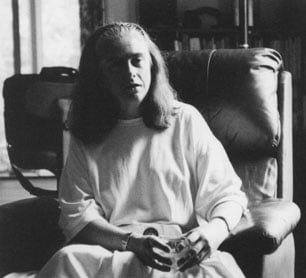
Lydia had her opinions about life, society, education, and politics. When I heard one that I didn’t think fit with others I played Devil’s advocate. She enjoyed the sparring, though she dreaded that someone who disagreed with the way she phrased one of her ideas might reject them all in spirit. Then I rescued a pair of foundling kittens and she was OK with anything. You’ve never met anyone more in love with cats. For her, they embodied the mystery in the human spirit. Kindness to them displayed the best of it.
I never knew Lydia to have an amorous partner, but I sense she’d had a life. For years she’d taught school in England and was a singer and dancer when Bob Dylan was cutting his chops in mod London. For her he was a geeky Stage Door Johnny, getting crushes on all the dancers. (“None of us would really do him,” she said. “He was just . . . Little Bobby.”) I wish I’d asked her more about her life.
Raised Episcopalian, Lydia respected the mysticism at the heart of all faiths. Half her friends were Wiccan or Pagan. She had a finger on the pulse of the occult underground, too. Had Lydia showed by surprise at the late Continental or Club Diablo, an honor guard of pierced and tatted goths would have pitched out the red–or black–carpet.
Her friends absolutely loved her, and it’s lucky she had a network. She never drove a car. She got everywhere she went with taxis, Ubers, or them. And that evening out–one of Lydia’s passions–would be a procedure, at least if you were the chauffeur.
The Prosecco would be chilling. You couldn’t get out of her gracious apartment without a few sips. That took a while. For the last two decades, she was slow. (“I can walk,” she’d say. “I’m not your grandmother.”) After dinner there might be a trip to the Wegman’s in North Buffalo–They have the best truffle oil!–or the Airport post office for a folder that needed the day’s postmark. I could handle it once a month.
Another thing Lydia loved: She loved Buffalo. I thought only a revolution would get her out of that haunted Linwood Avenue apartment she’d tenanted for, what, 30 years? When the house was sold she could have retired somewhere with easier living. She settled smoothly into the Campanile on Delaware. Our people, our architecture, our snowbanks, our sleet-storms, our short summers . . . We were her part of the universe, her Shire.
One steamy twilight in July I sat with Lydia and a couple other professors on the deck of Amici’s in Kenmore and recalled evenings past. Her speech was slower.
We spoke on the phone one night in October. She had 24-7 aides whom she accepted as family members. We talked about that next dinner. She just wanted to get herself walking a little bit better . . . Surely by the first warm twilight of the spring…
When keyboard polymath Jan Hammer learned of the passing of Jeff Beck, he was saddened that the magic of their collaborations would never happen again. I’ll miss those evenings with Lydia.
I seldom keep the phone by the bed, but I give thanks that I did one night last week. I woke to a comment on my Facebook post about Lydia from the martial artist Kevin Cunningham, who’d shared happy hours with her, too. He recalled her gift as a storyteller, and there he touched something. Through her reading and her astonishing personal connections, Lydia was indeed the treasurer of anecdotes. She rationed them, though. She gave you your story. I stood and stepped into the day with a smile, remembering one she’d saved for me.
Within recent decades a global conference had been held on a tiny island in Greece. Among the ambassadors was an American of greater influence than education. He met a local man and chanced to ask what he was doing there.
He was the mayor, he said, of the island’s one village. The American had never heard of it.
“We sent three ships to Troy,” the man said with a glow, and I will never forget the way Lydia’s eyes lit up as she finished. She knew I would get it.
Homer’s unforgettable Iliad is the Greek national epic about a war that was fought at least 1000 years before Christ. One of the conventions of the Homeric epic and anything closely tributing it (including Joyce’s Ulysses) is a long list of items often called, “the epic catalog.” In the Iliad, it’s a register of the ships and commanders besieging Troy. The still-standing village on the tiny island of Symi was the Iliad’s humblest listed contributor. This tale honoring a Bronze Age story-cycle illustrated the disconnect between the commercialism and “presentism” of contemporary culture and the transcendence of a different understanding. It reminded me that beauty and wonder can live on.
Thank you, Lydia. Now, farewell! You are at last fully with the other realm, that one of mystery and fantasy and imagination and wonder, with Alice and the Hatter, Aladdin and his lamp, the songs of the Muses, and the counsels of the Norns. You were, as Sean McDermott said of Buffalo, “one of one”–our precious, exasperating, precious Lydia!